SPIN Magazine 12/1991

$20.00

Issue Snapshot

  • Publication: SPIN

  • Date / Issue ID: December 1991 — Vol. 7, No. 9

  • Length: 128 pages 

  • Theme: Special Issue: The Year In Music (year-end wrap) 

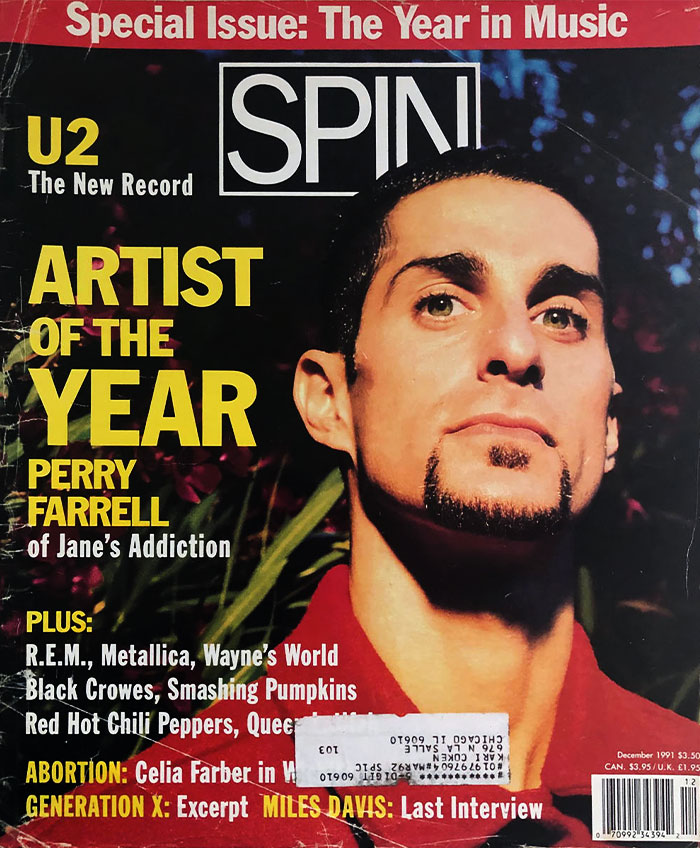
Cover

  • “Artist Of The Year”: Perry Farrell (Jane’s Addiction) 

  • The cover also teases U2 “The New Record” plus a heavy spread of big 1991 names (more below). 

What’s Inside (Notable Subjects Called Out For This Issue)

Wolfgang’s issue listing for SPIN December 1991 tags the magazine’s key subjects, which lines up with the cover blurbs:

  • U2 (new record coverage) 

  • Perry Farrell / Jane’s Addiction (Artist of the Year cover package) 

  • R.E.M. 

  • Metallica 

  • Wayne’s World (culture breakout) 

  • The Black Crowes 

  • Smashing Pumpkins 

  • Red Hot Chili Peppers 

  • Queen Latifah 

  • Miles Davis 

Why This Issue Matters

This is SPIN doing a full 1991 victory lap—a year where rock splintered into new mainstream shapes (alt/college becoming the center), metal expanded its cultural footprint, hip-hop kept asserting itself, and pop culture got rearranged by film/TV moments like Wayne’s World. The Perry Farrell “Artist Of The Year” choice also feels like SPIN planting a flag for alternative culture as the story, not the side story.

1 in stock

Purchase & earn 20 points!
 

Description

SPIN in the 90s felt like a magazine with its ear pressed to the floorboards. While a lot of mainstream music press was still clinging to the old rock hierarchy, SPIN leaned hard into what was actually changing the culture in real time. As the decade kicked off, it treated grunge and the wider “alternative” explosion as more than a sound. It was a generational handover. Bands that used to live in the margins suddenly became the center, and SPIN was one of the places documenting that shift with real urgency.

What made SPIN especially important in that era was how wide its idea of “alternative” could be. It didn’t just stop at guitars. The magazine gave hip-hop serious space and treated it as culture, not a novelty, at a time when plenty of legacy outlets still weren’t sure what to do with it. That mix of scenes and voices is a big part of why 90s SPIN reads like a time capsule of where the future was heading.

By the mid-90s, SPIN had enough authority to publish the Spin Alternative Record Guide (1995), a critic-driven map of the alt universe that became a reference point for fans and aspiring writers alike. It’s one of those artifacts that captures the era’s confidence: the sense that a new canon was being built, and SPIN was helping write it.

You may also like…