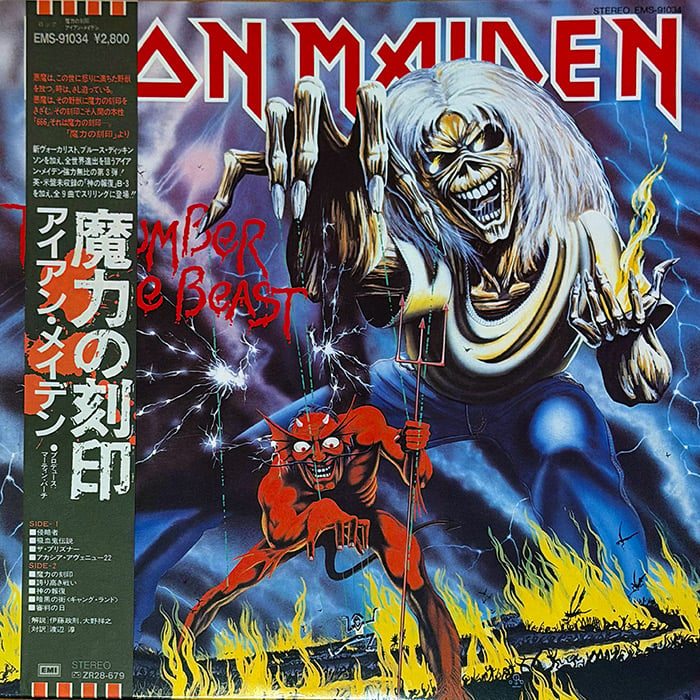
Iron Maiden’s The Number Of The Beast is one of the defining heavy metal albums of the 1980s and the record that pushed the band from rising force to global institution. Released on 22 March 1982, it was the first Iron Maiden album to feature Bruce Dickinson on lead vocals, and that change gave the band a sharper, more theatrical attack without sacrificing the grit and speed that made their early material so vital.
This is the sound of a band stepping up a level in every direction. Steve Harris’s songwriting is bigger, the twin guitar work of Dave Murray and Adrian Smith is more confident and melodic, and Clive Burr’s drumming gives the whole thing a restless, charging energy. Dickinson’s arrival matters because he brought a commanding, dramatic style that immediately expanded what Iron Maiden could do. Songs no longer just hit hard. They sounded cinematic.
What makes The Number Of The Beast so important is that it balances aggression with hooks almost perfectly. There is real menace in the title track, pure velocity in “Invaders” and “Gangland,” and a wild sense of narrative in “Run To The Hills,” “22 Acacia Avenue,” and “Hallowed Be Thy Name.” Even now, those songs still feel huge. Maiden were clearly building on the New Wave Of British Heavy Metal, but this album also reaches beyond that scene. It is lean, melodic, sinister, and built for arenas without sounding watered down.
The album also carried controversy almost immediately because of its title and imagery. That only added to its mystique, but the real reason it endured is the quality of the material. The Number Of The Beast is not just a landmark because it caused noise. It is a landmark because the songs are exceptional. “Hallowed Be Thy Name” alone remains one of the greatest metal tracks ever recorded, and the title cut and “Run To The Hills” are cornerstones of the genre.
For many listeners, this is the classic Iron Maiden album. You can argue for Powerslave or Piece Of Mind, but The Number Of The Beast is the one where everything clicked into place and the band’s identity became untouchable. It is fierce, catchy, dark, and endlessly replayable. If you want the album that explains why Iron Maiden became legends, start here.