SPIN Magazine 09/1993

$20.00

Issue Info: Vol. 9, No. 6140 pages (Google Books). 

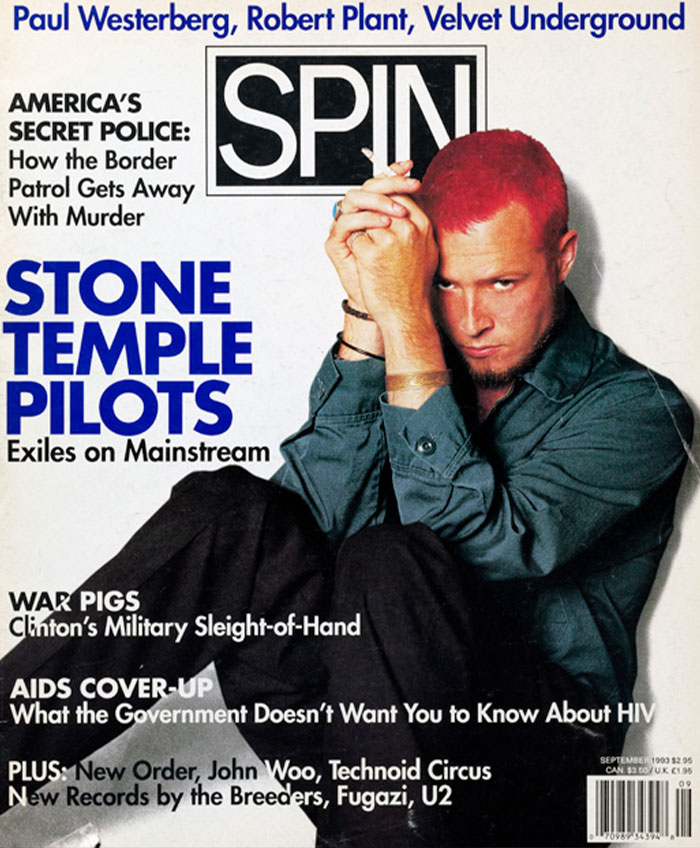
Cover: Stone Temple Pilots (Scott Weiland photo cover).

Cover lines and what they tell you about the issue

This cover is basically SPIN doing its early-90s superpower: big rock band up front, then a hard pivot into politics, culture panic, and investigative reporting.

Music + culture features called out on the cover:

  • Stone Temple Pilots — “Exiles On Mainstream” (cover story framing STP as outsiders inside the pop machine).

  • Paul Westerberg, Robert Plant, Velvet Underground (name-checks up top, signaling major legacy/alt pillars inside). 

Big reported features called out on the cover:

  • “America’s Secret Police: How The Border Patrol Gets Away With Murder” (heavy, rights-and-power investigative tone). 

  • “War Pigs: Clinton’s Military Sleight-Of-Hand” (post–Cold War politics, intervention optics, media messaging).

  • “AIDS Cover-Up: What The Government Doesn’t Want You To Know About HIV” (public health + distrust + institutions theme).

Bottom “PLUS” strip (scene snapshot energy):

  • The cover’s “PLUS” line includes multiple additional culture/music bits (the line is partially small, but it clearly stacks extra items beyond the main features).

The editorial “spine” of September ’93

This issue reads like SPIN insisting that music culture and the real world aren’t separate rooms:

  • STP represent the big 1993 tension: a band breaking mainstream while still being treated like interlopers (and sometimes “suspect” because they weren’t from the approved scene myth).

  • The Border Patrol and AIDS headlines point to SPIN’s appetite for accountability journalism—state power, bodies, consequences, and what gets buried. 

  • The Clinton “War Pigs” framing signals a magazine tracking how the early 90s US redefined force and narrative, right as “alternative” became a mainstream soundtrack.

1 in stock

Purchase & earn 20 points!
 

Description

SPIN in the 90s felt like a magazine with its ear pressed to the floorboards. While a lot of mainstream music press was still clinging to the old rock hierarchy, SPIN leaned hard into what was actually changing the culture in real time. As the decade kicked off, it treated grunge and the wider “alternative” explosion as more than a sound. It was a generational handover. Bands that used to live in the margins suddenly became the center, and SPIN was one of the places documenting that shift with real urgency.

What made SPIN especially important in that era was how wide its idea of “alternative” could be. It didn’t just stop at guitars. The magazine gave hip-hop serious space and treated it as culture, not a novelty, at a time when plenty of legacy outlets still weren’t sure what to do with it. That mix of scenes and voices is a big part of why 90s SPIN reads like a time capsule of where the future was heading.

By the mid-90s, SPIN had enough authority to publish the Spin Alternative Record Guide (1995), a critic-driven map of the alt universe that became a reference point for fans and aspiring writers alike. It’s one of those artifacts that captures the era’s confidence: the sense that a new canon was being built, and SPIN was helping write it.

You may also like…