

When people think of the origins of occult rock and heavy metal, the names Black Sabbath, Led Zeppelin, or even Aleister Crowley often rise to the surface. But long before Sabbath dropped their first doom-laden chords in 1970, another band had already summoned the Devil onto vinyl, flashing the horns of Satan and recording a full Black Mass for the world to hear. That band was Coven, formed in Chicago in the mid-1960s and led by the striking and enigmatic Jinx Dawson.
While many groups of the psychedelic counterculture dabbled in mysticism, Eastern philosophy, or vague occult imagery, Coven went further than anyone dared at the time. They built their identity around Satanism, ritual, and occult symbolism, making them the very first rock group to openly align themselves with the Left-Hand Path.
The Birth of Coven and Jinx Dawson’s Occult Heritage
Coven’s origins can be traced back to Chicago, Illinois, where vocalist Estelle “Jinx” Dawson grew up in a wealthy but eccentric family with aristocratic ties and, according to her, a heritage steeped in esoteric traditions. Dawson has often stated in interviews that her family background exposed her to ritual and occult ideas from a young age, and that these influences became inseparable from her artistic identity.
Alongside bassist Oz Osborne (not to be confused with Black Sabbath’s Ozzy Osbourne) and drummer Steve Ross, Dawson formed Coven in the mid-1960s. The band quickly established a reputation for their live shows, which were unlike anything else on the circuit. Where psychedelic rock bands projected swirling colors and sang about cosmic love, Coven bathed the stage in candlelight, adorned it with inverted crosses, and performed what appeared to be satanic rituals in the form of rock concerts. Dawson, with her flowing robes and commanding presence, stood less as a conventional singer and more as a High Priestess of Darkness.
This was not parody. For Dawson, the symbolism was authentic — an expression of rebellion, self-liberation, and inversion of social norms. For audiences, it was shocking, transgressive, and unforgettable.
Witchcraft Destroys Minds & Reaps Souls (1969)
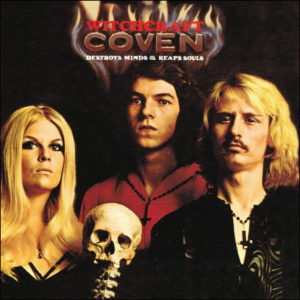
In 1969, Coven released their debut album on Mercury Records, and with it, they ignited a firestorm. Witchcraft Destroys Minds & Reaps Souls is now regarded as a milestone in occult rock and proto-metal, but at the time it was seen as dangerously subversive.
The album’s tracklist alone reads like an invocation: Black Sabbath, Pact with Lucifer, Dignitaries of Hell, Wicked Woman. At a time when mainstream America was already alarmed by youth rebellion, this was a direct provocation. But the final track, Satanic Mass, ensured Coven’s place in history.
“Satanic Mass” was a thirteen-minute recording of a staged Black Mass, complete with ceremonial invocations in Latin, ritual dialogue, and organ accompaniment. This was the first time a Black Mass had ever been commercially recorded and distributed. To the public, it was a shocking confirmation of their fears about rock and roll’s connection to Satan.
The album’s imagery was equally groundbreaking. On the back cover, Coven posed while flashing the “sign of the horns” — years before Ronnie James Dio would popularize it in heavy metal. To modern eyes, it looks like typical metal symbolism. In 1969, it was a scandal.
Controversy, Manson, and Censorship
The timing of Coven’s debut was catastrophic. In August 1969, Charles Manson and his “Family” carried out the Tate–LaBianca murders in Los Angeles, killings that were widely linked to occultism and apocalyptic cult behavior. America plunged into a moral panic, and anything associated with Satanism or ritual became suspect.
Coven suddenly found themselves on the wrong side of history. Mercury Records, fearful of being associated with Satanic violence, pulled the album from circulation. Pressings were destroyed or recalled, making original copies of Witchcraft Destroys Minds & Reaps Souls exceedingly rare and highly collectible today.
The backlash essentially ended Coven’s initial momentum. They had been too far ahead of their time. Their authenticity and boldness, which later generations would celebrate, became a liability in 1969 America.
A Softer Turn: Coven (1972)
In an attempt to regain footing, Coven dramatically shifted direction. Their self-titled second album, released in 1972 on MGM Records, moved away from overt occult themes toward mainstream rock. The biggest single from this era was One Tin Soldier, a track with a moral message of peace and justice.
The song became a surprise hit after being used in the 1971 counterculture film Billy Jack. It charted in both the U.S. and Canada and became Coven’s best-known commercial success. But this sudden embrace of peace-and-love messaging stood in stark contrast to the Satanic rituals of their debut, leaving original fans confused and alienated.
The mainstream public, however, now saw Coven in a completely different light: no longer occult provocateurs, but a socially conscious rock group aligned with anti-war and countercultural values.
Blood on the Snow (1974) and Fade into Obscurity
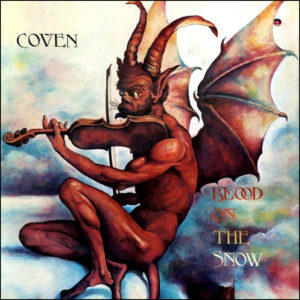
Coven’s third album, Blood on the Snow (1974), was released on Buddah Records and leaned further into hard rock but without the diabolical edge of their beginnings. It is notable as one of the first rock albums to feature a promotional music video, produced specifically for television broadcast — a pioneering move that anticipated MTV nearly a decade later.
Yet despite this innovation, the album failed to make a lasting commercial impact, and Coven soon faded from mainstream recognition. By the late 1970s, the band had all but disappeared.
Occult Legacy Rediscovered (1980s–1990s)
In the 1980s, as heavy metal pushed into darker territories with bands like Venom, Slayer, and Mercyful Fate adopting Satanic imagery, music historians began to look backward. What they found was Coven’s debut album, a record that had predated all of this by nearly a decade.
Collectors began to seek out Witchcraft Destroys Minds & Reaps Souls, elevating it to cult status. By the 1990s, it was regarded as a proto-metal artifact, and Jinx Dawson was retrospectively crowned one of the most daring figures in rock history. Coven’s authenticity — their willingness to actually stage a Black Mass on record — set them apart from all later imitators.
Resurgence and Ritual Return (2000s–Present)
In the 2000s and 2010s, Coven experienced a revival as Dawson re-emerged to perform at select festivals, including the Roadburn Festival in 2017. For the first time in decades, audiences witnessed Dawson once again presiding over dark, ritual-like performances, her presence undimmed.
Reissues of Witchcraft Destroys Minds & Reaps Souls finally allowed the album to reach a global audience. For younger fans steeped in the aesthetics of doom and black metal, Coven’s music felt both ancient and timeless, a missing link between 1960s psychedelia and the infernal sounds that came after.
Dawson’s influence has been particularly felt in the wave of occult rock bands that rose in the 2010s — groups like Ghost, Blood Ceremony, and The Devil’s Blood — all of whom owe a debt to Coven’s combination of ritual, theater, and rebellion.
Legacy: The First Satanic Rock Band
Coven’s legacy is greater than their discography. They were the first band to record a Black Mass. They were the first to use the sign of the horns as a Satanic salute. They were the first to openly embrace Satanic imagery in a rock context. Where most groups of their time hid behind metaphor, Coven made their stance explicit.
Though overshadowed in mainstream rock history by Black Sabbath, Coven were arguably the truest pioneers of occult rock. Black Sabbath may have given metal its sound, but Coven gave it its symbols. The image of the inverted cross, the devil’s horns, the Black Mass — these entered rock mythology through Coven first.
Today, Jinx Dawson is recognized not just as a singer but as a cultural figure — a High Priestess of Rock’s Occult Underground. Her willingness to risk scandal in 1969 carved out a space for everything that followed. Without Coven, there may not have been Mercyful Fate, King Diamond, or Ghost.
Coven’s story is one of daring vision, cultural backlash, and eventual vindication. They lit the first black candle in the temple of rock music. It would take the world decades to catch up to their flame.
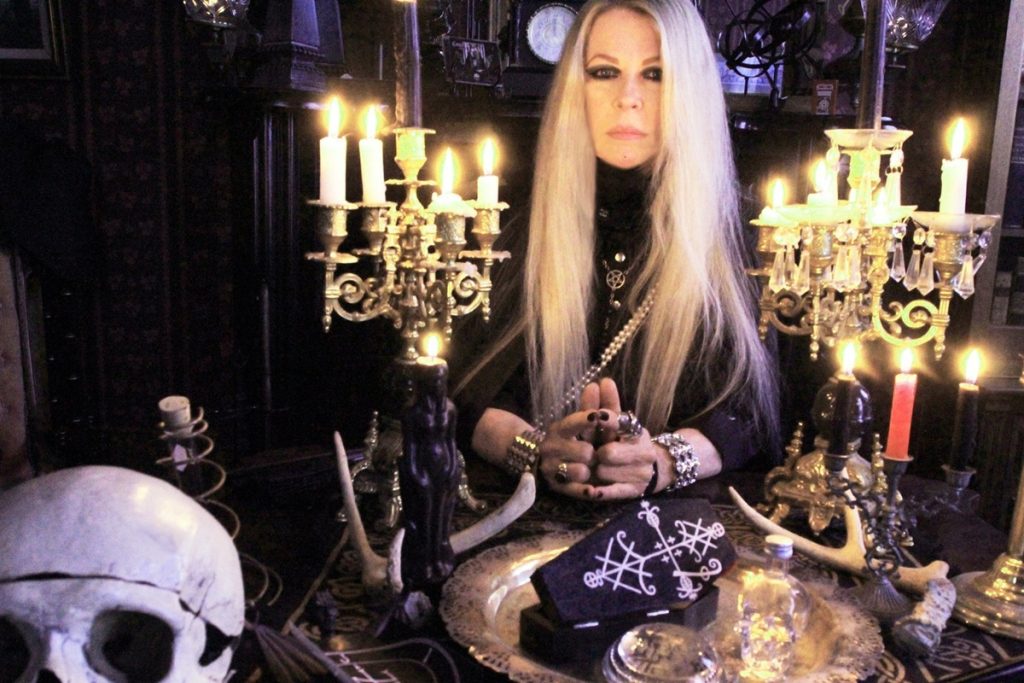
Coven, led by singer Jinx Dawson, released Witchcraft Destroys Minds
Jinx Dawson – High Priestess of Occult Rock
Few figures in rock history are as enigmatic and influential as Jinx Dawson, the frontwoman of Coven and one of the first women in rock to openly embrace the occult. Long before theatrical Satanism became a hallmark of heavy metal, Dawson was lighting black candles on stage, flashing the horns of the Devil, and singing invocations to Lucifer with operatic flair.
Born into a wealthy Midwestern family with aristocratic roots, Dawson has often spoken of her exposure to esoteric traditions from an early age. Whether literal or symbolic, this background gave her a foundation upon which she built her artistic persona: a mixture of elegance, menace, and ritual authority. Unlike many of her contemporaries, for whom occult references were little more than countercultural window dressing, Dawson embodied the role of a High Priestess, carrying herself with theatrical seriousness and conviction.
In 1969, she became one of the most infamous women in rock with the release of Coven’s Witchcraft Destroys Minds & Reaps Souls. On the album’s back cover, she and her bandmates boldly displayed the “sign of the horns” for the first time in rock history, decades before the gesture would be immortalized by Ronnie James Dio. Onstage and on vinyl, Dawson presided over a full-length Satanic Mass, her voice weaving through ritual chants that shocked a nation already trembling from the Manson murders and moral panic.
But Dawson was more than a provocateur. She was an innovator. With her commanding stage presence, she carved out a space for female authority in the male-dominated world of heavy music, embodying a figure of occult power rather than a submissive muse. Where most women in rock were relegated to supporting roles or objectified positions, Dawson declared herself a priestess of the Left-Hand Path, commanding the stage with equal parts grace and menace.
After Coven’s fall from mainstream view in the 1970s, Dawson largely disappeared from the spotlight. Yet she remained a cult figure, whispered about among record collectors and occultists. When she returned in the 2000s and 2010s for a new wave of Coven performances, audiences were stunned to see that she still carried the aura of mystery and darkness that had defined her youth. Appearing at festivals like Roadburn, she proved that her presence remained undimmed — a timeless icon of ritual theater in music.
Today, Jinx Dawson is celebrated as the forgotten mother of metal’s occult tradition. Her influence can be seen in every band that uses ritual imagery, every singer who adopts the role of dark priest or priestess, and every stage set ablaze with candles and inverted symbols. If Black Sabbath fathered heavy metal, then Jinx Dawson and Coven gave it its soul — dark, mysterious, and forever bound to the forbidden.