SPIN Magazine 04/1992

$20.00

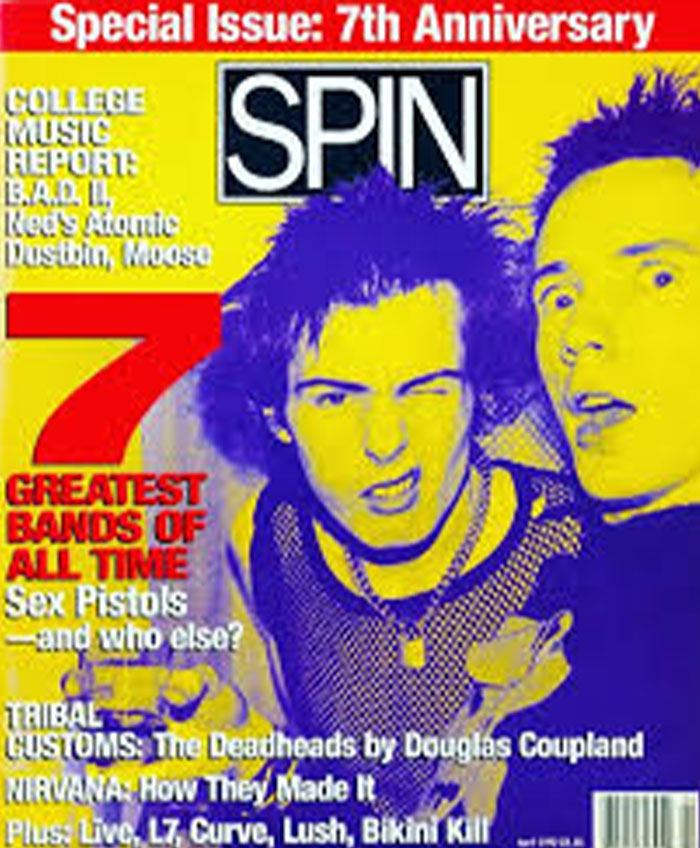
Cover: Sex Pistols (Johnny Rotten & Sid Vicious), built around a big anniversary-style “canon” package: “7 Greatest Bands Of All Time”. 

What This Issue Is “About”

April ’92 reads like SPIN doing a loud, self-aware stocktake: part scene report, part argument-starter, part cultural time capsule. It’s not fully “alt monoculture” yet, but you can feel the magazine leaning harder into the era’s new power centers (college rock, punk lineage, emerging underground names) while still keeping one foot in big-rock consensus.

The Big Packages & Notable Features

  • 7 Greatest Bands Of All Time (the core anniversary feature)

    SPIN’s list leans heavily toward a classic-rock + punk + hip-hop consensus. The “seven” framing also spins off smaller humor/side lists (very early-’90s magazine energy). 

    The bands SPIN highlighted in that top tier (as discussed in coverage of the issue): Sex Pistols, The Beatles, The Rolling Stones, Led Zeppelin, Public Enemy, The Ramones, Jimi Hendrix. 

  • College Music Report / Guide To College Music

    A scene-scouting package that name-checks then-rising or newly breaking acts—called out in retrospectives as impressively forward-looking. Artists mentioned include The Breeders, Manic Street Preachers, Swervedriver, Uncle Tupelo, Moose. 

    The cover also explicitly teases the College Music Report with names like L7 and Ned’s Atomic Dustbinalongside Moose. 

  • “Tribal Customs: The Deadheads” (Douglas Coupland)

    A culture-piece angle on Grateful Dead fandom (with Coupland’s then-contemporary “tribes” lens). It’s promoted right on the cover.

  • Nirvana feature

    The issue is regularly sold/remembered as containing a Nirvana piece (often described along the lines of “how they made it”), and Nirvana is a highlighted draw in listings for this specific issue. 

  • Other artists commonly associated with this issue in listings

    Depending on the seller/lister, you’ll often see Bikini Kill and Basehead included in the “featured inside” rollcall for April ’92. 

Tone, Design, and Why Collectors Like It

  • Peak early-’90s SPIN art direction: bold blocks, loud cover lines, and list-driven editorial framing that feels pre-internet but proto-clickbait in the best way. (It’s a “hand-held argument” you could throw in a backpack.)

  • A snapshot of shifting taste: SPIN still nods to established canon, but the supporting material (college report, underground profiles, scene microcultures) is where you feel the future creeping in

1 in stock

Purchase & earn 20 points!
 

Description

SPIN in the 90s felt like a magazine with its ear pressed to the floorboards. While a lot of mainstream music press was still clinging to the old rock hierarchy, SPIN leaned hard into what was actually changing the culture in real time. As the decade kicked off, it treated grunge and the wider “alternative” explosion as more than a sound. It was a generational handover. Bands that used to live in the margins suddenly became the center, and SPIN was one of the places documenting that shift with real urgency.

What made SPIN especially important in that era was how wide its idea of “alternative” could be. It didn’t just stop at guitars. The magazine gave hip-hop serious space and treated it as culture, not a novelty, at a time when plenty of legacy outlets still weren’t sure what to do with it. That mix of scenes and voices is a big part of why 90s SPIN reads like a time capsule of where the future was heading.

By the mid-90s, SPIN had enough authority to publish the Spin Alternative Record Guide (1995), a critic-driven map of the alt universe that became a reference point for fans and aspiring writers alike. It’s one of those artifacts that captures the era’s confidence: the sense that a new canon was being built, and SPIN was helping write it.

You may also like…