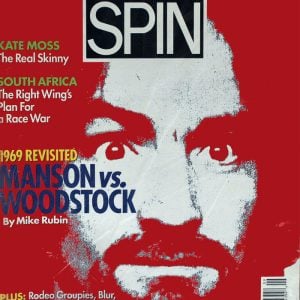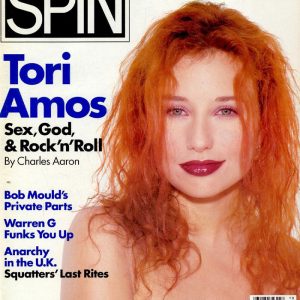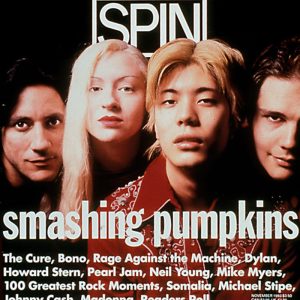
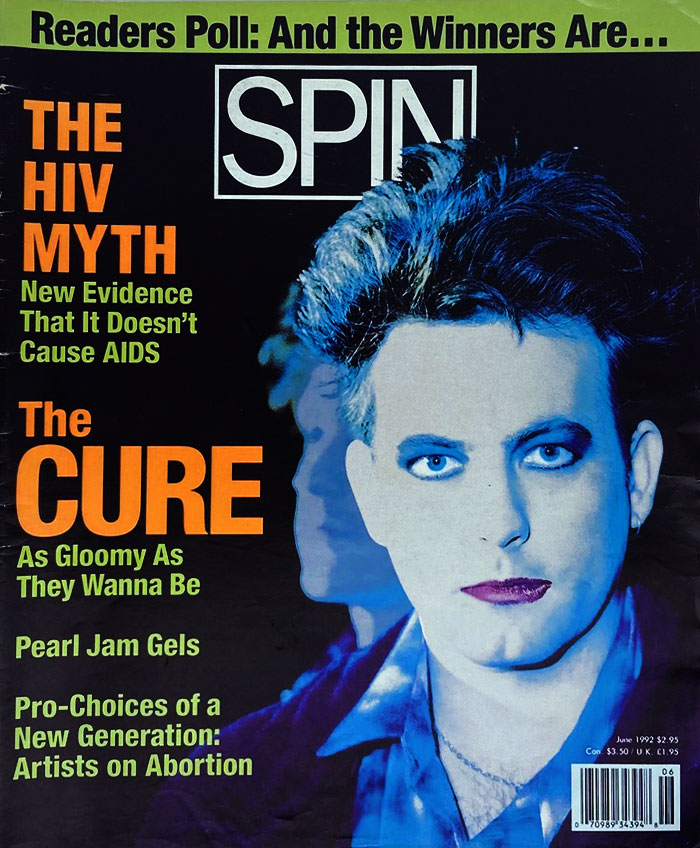
SPIN Magazine 06/1992

$20.00

Cover: The Cure (Robert Smith) 

Cover lines / big hooks:

  • “The HIV Myth: New Evidence That It Doesn’t Cause AIDS”

  • “The Cure: As Gloomy As They Wanna Be” 

  • Pearl Jam feature (“We’ve Got a Feeling…”) 

  • Pro-Choice / Abortion package: “Pro-Choices of a New Generation: Artists on Abortion,” plus a look at presidential candidates on abortion and freedom of choice 

The Core Features (What This Issue Is Really About)

1) The Cure cover story (“Taking the Cure”)

A major Cure moment in 1992, framed around their identity as “fright-wigged rockers,” and the band’s relationship with gloom as persona and fuel. 

2) Pearl Jam: the “intensity” argument

A feature positioned as Pearl Jam preserving the raw charge of rock’n’roll at a time when mainstream rock was being reset by alternative bands. (By Lauren Spencer.) 

3) The HIV/AIDS controversy package (“Fatal Distraction”)

Promoted as a headline story and one of the issue’s major investigative/argument pieces. 

4) Pro-Choice / culture-and-politics package (“Antihero”)

Framed around the right to choose, with Ann Magnuson and Henry Rollins featured “for the defense,” plus political context around abortion. 

Departments & Scene Radar

Flash / quick-hit coverage includes: Skinny Puppy, En Vogue, Juliana Hatfield, Cows, Me Phi Me, Cracker, Joe Public (and more). 

Film/visuals: Jim Jarmusch’s Night on Earth in “Moving Images,” plus “Coming Attractions.” 

Style: “SPIN Fashion: American Pie” (a melting-pot / Americana style angle).

1 in stock

Purchase & earn 20 points!
 

Description

SPIN in the 90s felt like a magazine with its ear pressed to the floorboards. While a lot of mainstream music press was still clinging to the old rock hierarchy, SPIN leaned hard into what was actually changing the culture in real time. As the decade kicked off, it treated grunge and the wider “alternative” explosion as more than a sound. It was a generational handover. Bands that used to live in the margins suddenly became the center, and SPIN was one of the places documenting that shift with real urgency.

What made SPIN especially important in that era was how wide its idea of “alternative” could be. It didn’t just stop at guitars. The magazine gave hip-hop serious space and treated it as culture, not a novelty, at a time when plenty of legacy outlets still weren’t sure what to do with it. That mix of scenes and voices is a big part of why 90s SPIN reads like a time capsule of where the future was heading.

By the mid-90s, SPIN had enough authority to publish the Spin Alternative Record Guide (1995), a critic-driven map of the alt universe that became a reference point for fans and aspiring writers alike. It’s one of those artifacts that captures the era’s confidence: the sense that a new canon was being built, and SPIN was helping write it.

You may also like…