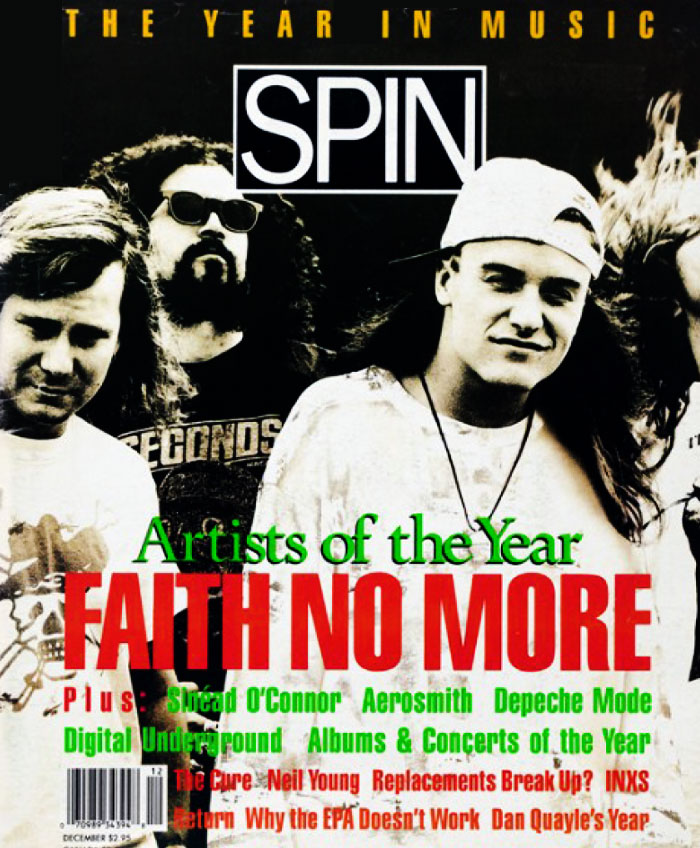
SPIN Magazine 12/1990

$25.00

Cover

This is the Faith No More “Artists of the Year” cover, framed as SPIN’s big year-end statement. The cover lines also telegraph the issue’s sweep across alt-rock, pop, hip-hop, and classic rock, including callouts like Sinead O’Connor, Aerosmith, Depeche Mode, Digital Underground, The Cure, Neil Young, The Replacements, INXS, plus an “Albums & Concerts of the Year” roundup. 

What’s Inside (The Big Stuff)

  • Faith No More: “Artists of the Year” — the centerpiece profile/feature positioning the band (and Mike Patton era chaos) as emblematic of where heavy/alternative culture is heading. 

  • Year-end lists & critics’ picksalbums and concerts of the year style packages (the cover explicitly sells this as a core feature).

  • Major features noted in listings/coverage: The Cure, Brian Eno, The Replacements, Neil Young, INXS (and more) appear as feature subjects within the issue. 

Why This Issue Still Rules

  • It captures the exact moment alt-metal and alternative rock are becoming “the center,” not the side-quest.

  • Faith No More getting the year-end crown is a very SPIN move: adventurous, antagonistic, future-facing.

  • The supporting cast on the cover lines reads like a 1990 crossroads map: post-punk/alt (The Cure), art-rock intel (Eno), legacy giants (Neil Young/Aerosmith), synth-pop canon (Depeche Mode), and left-field hip-hop (Digital Underground). 

Quick Collector Notes

  • This is widely cataloged as Dec 1990 Vol. 6 No. 9 and commonly sold/identified specifically by the Faith No More “Year In Music” cover.

1 in stock

Purchase & earn 25 points!
 

Description

SPIN in the 90s felt like a magazine with its ear pressed to the floorboards. While a lot of mainstream music press was still clinging to the old rock hierarchy, SPIN leaned hard into what was actually changing the culture in real time. As the decade kicked off, it treated grunge and the wider “alternative” explosion as more than a sound. It was a generational handover. Bands that used to live in the margins suddenly became the center, and SPIN was one of the places documenting that shift with real urgency.

What made SPIN especially important in that era was how wide its idea of “alternative” could be. It didn’t just stop at guitars. The magazine gave hip-hop serious space and treated it as culture, not a novelty, at a time when plenty of legacy outlets still weren’t sure what to do with it. That mix of scenes and voices is a big part of why 90s SPIN reads like a time capsule of where the future was heading.

By the mid-90s, SPIN had enough authority to publish the Spin Alternative Record Guide (1995), a critic-driven map of the alt universe that became a reference point for fans and aspiring writers alike. It’s one of those artifacts that captures the era’s confidence: the sense that a new canon was being built, and SPIN was helping write it.

You may also like…