
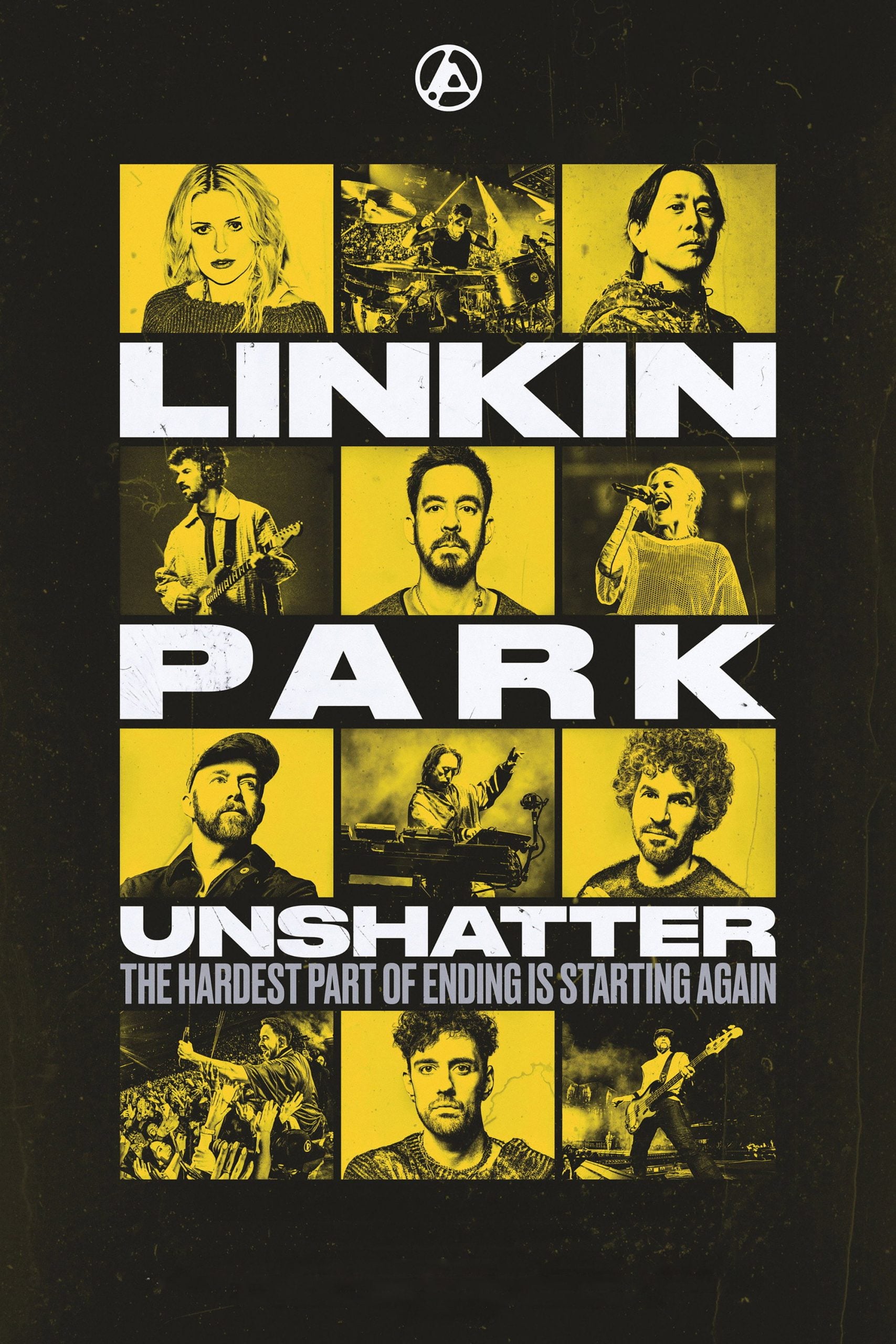
I need to start this review with something that will probably annoy a few longtime Linkin Park fans.
I was never really a Linkin Park fan.
I respected what they did, I understood how important they were to an entire generation, and there were obviously songs I liked, but they were never a band I connected with enough to buy the records, follow the tours or consider myself part of their world.
Then Emily Armstrong arrived.
And somehow, completely unexpectedly, I fell in love with Linkin Park.
That is probably one of the main reasons Unshatter affected me as much as it did. I came into this story backwards. I wasn’t watching a band I had loved for twenty-five years trying to find a way forward. I was watching the story of how the version of Linkin Park that finally grabbed me came into existence.
What I really appreciated about Unshatter is that Emily isn’t presented as some magical replacement who suddenly fixes everything. The film makes it very clear that Linkin Park’s return was a slow, uncertain process.
After Chester Bennington’s death in 2017, there was no obvious path forward. There wasn’t even any guarantee that there should be a path forward.
The surviving members gradually began making music together again, and what becomes fascinating is watching something that wasn’t necessarily intended to become “the new Linkin Park” slowly start feeling like Linkin Park.
Then Emily walks into the picture.
For me, this is where the film really comes alive.
There is something incredibly exciting about watching her gradually find her place within this enormous machine. She isn’t Chester Bennington and, crucially, she doesn’t try to be Chester Bennington.
Mike Shinoda and the others clearly understood that attempting to find somebody who could impersonate Chester would have reduced the band to nostalgia.
Emily brings something completely different.
She has aggression, vulnerability, attitude and an absolutely monstrous voice, but she also has her own personality. When she sings the older material, I don’t hear somebody trying to reproduce Chester’s performances note for note.
I hear somebody interpreting those songs through her own voice.
That was exactly what made me start paying attention to Linkin Park in the first place.
When The Emptiness Machine appeared in 2024, something immediately clicked for me. Suddenly I wanted to hear what this band was doing.
Then From Zero arrived and I found myself doing something I never expected to do:
Playing a Linkin Park album repeatedly.
Emily changed the chemistry enough to make me hear the band differently.
Watching Unshatter filled in the missing pieces.
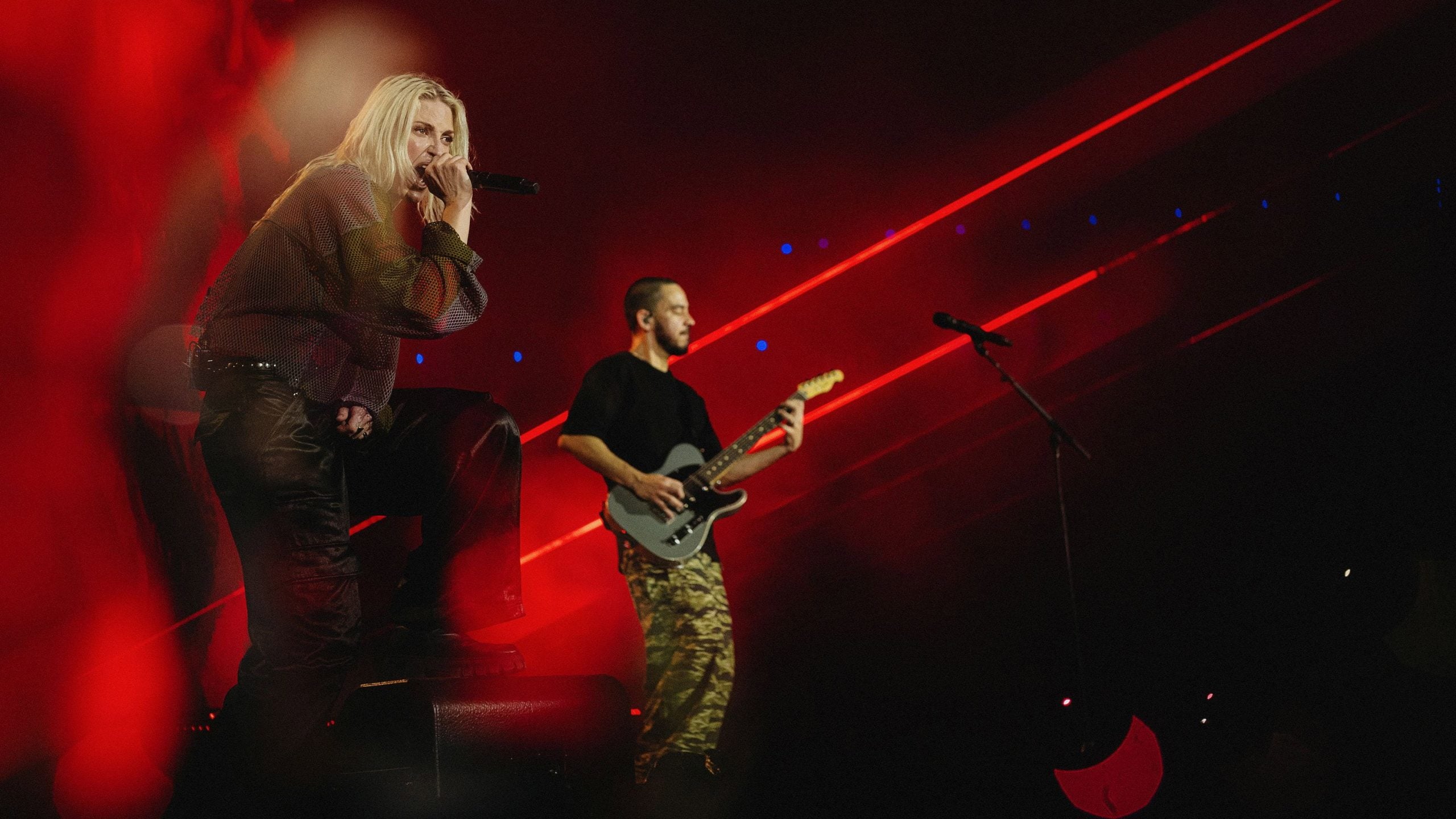
You see the uncertainty. You see how cautiously everyone approaches the idea of bringing the band back. You see Emily entering a situation where millions of people are inevitably going to compare her with one of the most beloved singers of his generation.
That must have been absolutely terrifying.
Yet there is a point during the film where she stops feeling like “the new singer” and simply becomes the singer in Linkin Park.
That transition is one of the strongest parts of the documentary.
The studio footage is probably what I enjoyed most. Seeing songs being constructed, watching ideas being thrown around and hearing unfinished versions of material gives you a much better understanding of how naturally this lineup developed.
Colin Brittain’s arrival is equally important, because this wasn’t simply a case of replacing one vocalist and continuing exactly where the band left off.
Linkin Park effectively had to rebuild the internal chemistry of the group.
The São Paulo footage then gives the whole story its payoff. Watching this newly reconstructed version of Linkin Park standing in front of an enormous audience makes all those earlier scenes of hesitation and uncertainty suddenly feel very real.
And then there is Chester.
The film handles his presence beautifully.
He is never treated as something that has to be pushed aside so the new version of Linkin Park can exist. His history with the band remains part of everything they are doing.
That distinction is incredibly important.
Emily Armstrong didn’t erase Chester Bennington.
What she did was give Linkin Park another voice and another personality strong enough for the band to create something new rather than spend the rest of their career trying to recreate something that could never be recreated.
There are things the documentary could have explored more deeply. The enormous backlash surrounding Emily’s appointment is largely absent, which feels strange considering how significant that reaction was when the lineup was announced.
I think that’s a fair criticism.
But the emotional centre of Unshatter worked for me.
This is ultimately a film about a group of people deciding whether something they loved could continue after losing somebody who was absolutely central to it.
And the answer they eventually found wasn’t to pretend nothing had happened.
They changed.
Maybe that explains my own strange relationship with Linkin Park.
Millions of people fell in love with this band because of Chester Bennington.
I fell in love with them because of Emily Armstrong.
Watching Unshatter, I finally understood how both of those things can exist at the same time.
And I walked out liking Emily Armstrong even more than I did when I walked in.
More surprisingly, I walked out feeling like I finally understood Linkin Park.
And yeah, now, I am a fan! Can’t wait to see what they do next!


Views: 7